Coaching client onboarding, signed without chasing anyone.
In this coaching client onboarding process, proposals and agreements go out the moment someone says yes, and come back signed. The new client lands in your system without you copying anything across.
By Rexhen Doda · How we write
Where the yes gets lost in onboarding
The call goes well and they say yes. Then you have to find the right agreement, fill in their details, send it, remember to chase it, and set them up once it’s back. Every step is a chance for a new client to cool off, and it all happens on top of your week.
The agreement isn’t optional paperwork either. The ICF Code of Ethics expects coaches to explain and agree the terms of coaching with a client before or at the first session, so a slow agreement holds up the coaching itself.
What I set up
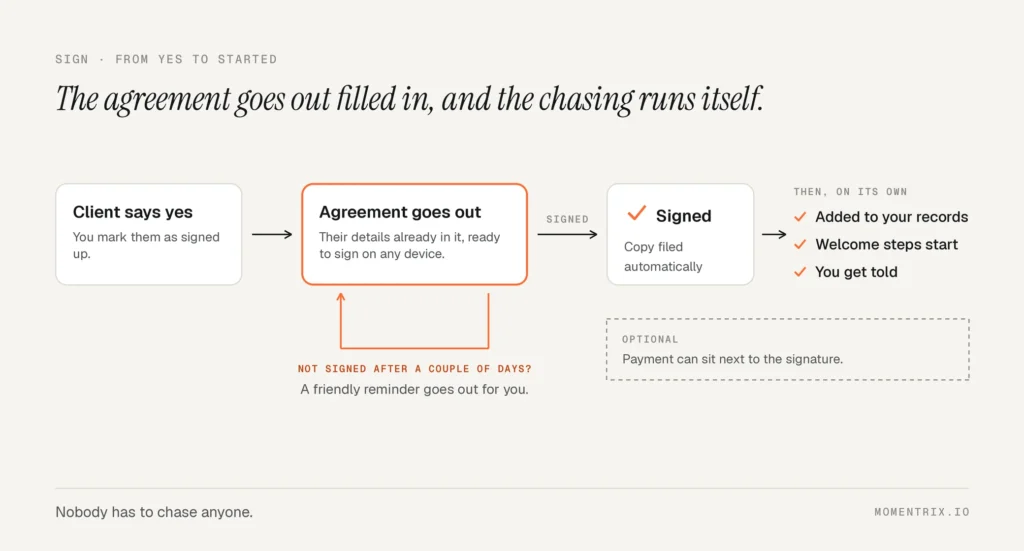
- Agreements filled in for you. Your coaching agreement goes out with the client’s details already in it, ready to sign on any device.
- Reminders that do the chasing. If it isn’t signed in a couple of days, they get a friendly reminder. You don’t have to send it.
- A clean hand-off once it’s signed. The signed copy is filed, the client is added to your records, and their welcome steps start.
- Payment in the same flow if you want it. Signing and paying can sit side by side, so nothing waits on an invoice.
What you still do
You decide what goes in your agreement. I make sure it goes out on time and comes back.
I’m not a lawyer, and I don’t write your terms. If you need an agreement drafted, use a lawyer who knows coaching. I build the system that sends and tracks it.
For context: in the US, the ESIGN Act says a contract can’t be denied legal effect just because it’s electronic, and in the UK the Law Commission’s report on electronic execution confirmed that electronic signatures can be used to execute documents in most cases.
Why work with me
Before Momentrix, I was head of marketing at Purple Circle, a business coaching company, and hosted more than 400 episodes of its podcast, Success Leaves Clues, recording up to 8 a day at peak. I’ve spent seven years building automations for six- and seven-figure businesses, and now I build them only for coaches.
You can see what I’m building for coaches right now on my LinkedIn.
The rest of what runs between your calls
This is one of four jobs I set up for coaches. The other three:
How the four jobs fit together, and what to keep personal: coaching business automation.
You can start with the coaching client onboarding process and add the rest later. See the packages for how a build works.
Coaches usually ask.
- Are e-signatures legally valid for coaching agreements?
- In most places, yes, for this kind of agreement. If you’re unsure about your situation, check with a lawyer.
- Can I keep my current agreement?
- Yes. We use your agreement as it is.
- What if a client wants changes before signing?
- The request comes to you. Once you’ve agreed the change, the updated version goes out the same way.
- What are the steps in client onboarding for a coach?
- The agreement goes out and gets signed, payment is taken if you want it in the same flow, the client is added to your records, and a welcome message with their first session goes out. Each step starts when the one before it finishes.
- Which documents can’t be signed electronically?
- Some documents still need wet ink or extra formalities, such as wills and some court and family-law papers. A coaching agreement usually isn’t one of them, but check with a lawyer if you’re unsure about your situation.